
CXMT races to scale up as yield gaps and export curbs bite

CXMT, a leading Chinese DRAM maker, is expanding aggressively but faces significant production and regulatory hurdles, ChosunBiz reported, citing industry sources. Despite rising global memory demand, the company’s wafer output has hit capacity limits, with yield issues and US export restrictions constraining further growth.
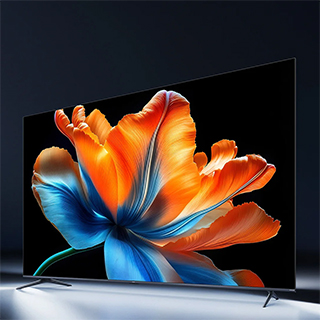 Xiaomi has officially launched its 2026‑generation Xiaomi TV S Mini LED series globally, introducing two premium large‑format models – the 98-inch Xiaomi TV S Mini LED 98 2026 and 85-inch Xiaomi TV S Mini LED 85 2026. The new lineup brings advances in Mini LED technology, display precision, and cinematic immersion. The 98‑inch model leads the series with an advanced QD‑Mini LED panel featuring…
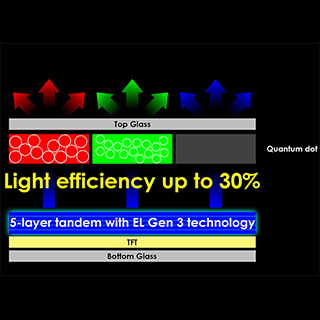 QD‑OLED technology has undergone one of the most dramatic evolutions in modern display engineering. What began as a bold attempt to merge OLED contrast with quantum‑dot color has now matured into a platform capable of exceptional clarity, efficiency, and durability. MSI, in close partnership with Samsung Display, has been at the center of this transformation – adopting each generation of QD‑OLED…
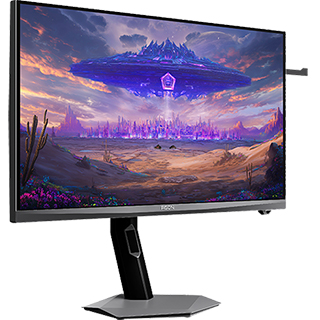 AOC has officially stepped into uncharted territory with the launch of the AOC AGON Pro AGP277QK, a monitor that doesn’t just raise the bar for esports displays – it punts it into the stratosphere. Announced alongside its Philips sibling – the Philips 27M2N5500XD in Dember 2025, the AGP277QK is one of the world’s first true 1000 Hz dual‑mode gaming monitors, a milestone that feels less like an…