
Samsung foundry recovery gains pace, but 2nm, Taylor fab remain hurdles

Samsung Electronics’ foundry recovery is gaining pace as higher utilization, firmer pricing, and stronger advanced-node demand improve earnings, but a sustained return to profit will depend on 2nm yields and how quickly its Taylor fab in Texas ramps production.
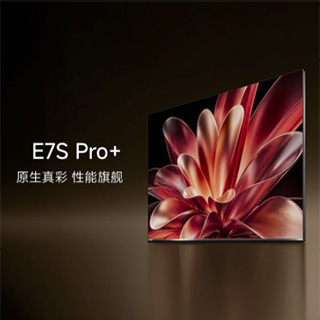 The Hisense E7S Pro+ wazs unveiled alongside the U7T Pro RGB Mini LED TVs at Hisense’s autumn press conference. It arrived as the performance flagship, built to push brightness, HDR, and motion to extremes. The three models from the series are already on sale on JD, where the series is also referred to as E7S Ultra. Hisense 100E7S Pro+ – 6000 nits, 7560 local dimming zones, CNY 19999 (~USD 2980)…
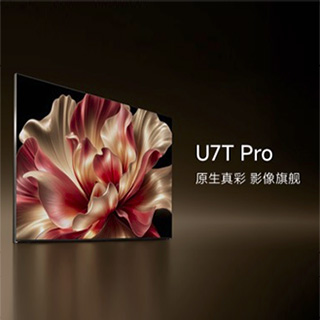 As usual, Chinese brands present their new TVs for the local market in the autumn and for the global market we have to wait for CES 2027 in early January next year. One of the leading series of TVs for next year is expected to be the Hisense U7T Pro RGB Mini LED series. It was unveiled during the brand’s autumn conference in Beijing, followed by the Hisense E7S Pro+ series. The focus of the…
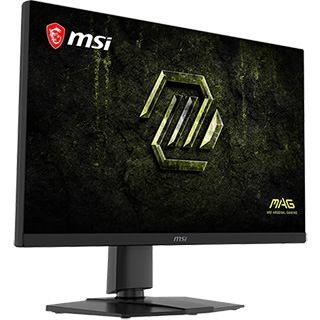 The MSI MAG 271KPD7 was announced at Computex 2026 with prospects to launch in July, but it was actually launched today with its first market being Japan. The model boasts a rare dual‑mode display system that lets users switch between ultra‑high‑resolution clarity and extreme refresh‑rate performance. In its 5K mode (5120 x 2880 at 75Hz), the MAG 271KPD7 delivers exceptionally sharp visuals with…
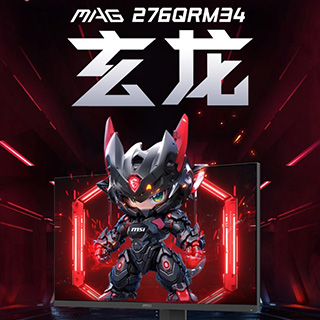 MSI MAG 26QRM34 is an affordable yet feature-packed gaming monitor for China with a 27-inch Rapid IPS display with a QHD resolution and a Mini LED backlight. The latter employs 1152 local dimming zones, enabling a peak brightness of 1000 nits and VESA DisplayHDR 1000 certification. Color coverage is equally ambitious: 147% sRGB, 98% Adobe RGB, and 99% DCI‑P3, making the MAG 26QRM34 suitable for…
 Acer Predator XB243YK V3 was launched in China with a very peculiar display, which we have seen only on the ViewSonic VX24G26J-4K so far. Both monitors are built around a 23.8-inch Fast IPS display with a 4K resolution and a 160Hz refresh rate. The display delivers a sharp 185 ppi image and has a native 8-bit color depth with 100% sRGB and 95% DCI-P3 color space coverage. Typical brightness is…