
Taiwanese optics industry poised to reshape automotive electronics amid autonomous driving boom

As the automotive sector pivots toward autonomous driving technologies, Taiwan’s optics industry is rapidly evolving from a consumer electronics supplier into a critical player in advanced vehicle sensing systems. The transition reflects broader shifts in automotive design where cameras serve as fundamental sensory organs rather than peripheral accessories, driving new technical and commercial demands.
Continue reading

European automakers face US-China squeeze as South America emerges as key buffer

European car manufacturers are confronting a complex geopolitical and economic dilemma that threatens their global competitiveness. Increasing tariffs and unpredictable policies in the US, coupled with aggressive competition from emerging domestic Chinese automakers, are squeezing European firms in their two largest markets. This dual pressure is forcing automakers to seek new growth regions, notably in South America, but political obstacles within Europe risk delaying critical trade agreements.

Continue reading

LinkCom magnetic component price pressure eases; wireless charging module prices rise by 20%

The Taiwanese passive components industry continued to experience a wave of price increases. Magnetic component manufacturer LinkCom pointed out that since magnetic components primarily use iron powder cores as raw materials, supplemented with minimal amounts of copper wire, their current costs are relatively less affected by metal price fluctuations.

Continue reading

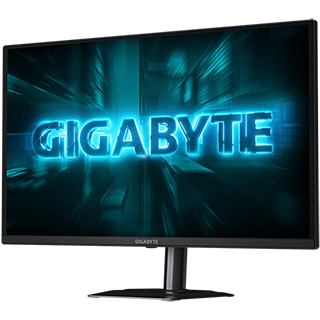
Gigabyte GO27Q24G is here with a RealBlack Glossy MLA+ WOLED display and a 240Hz refresh rate

Gigabyte GO27Q24G is the latest edition to Gigabyte’s OLED/QD-OLED gaming lineup. Built around MLA+ WOLED technology and a RealBlack Glossy finish, the panel combines exceptional brightness, deep contrast, and elite motion performance in a compact QHD form factor. At its core is a 27‑inch WOLED panel by LGD with a native resolution of 2560 x 1440 px. It covers 99% of the DCI‑P3 color space and…

Continue reading

Kinpo Group strengthens profitability in 2026, accelerates AI business and ODM transformation

Kinpo Group held its annual year-end party on January 21, during which company chairman Jerry Hsu highlighted that US tariff policies in early 2025 had temporarily stalled the global consumer market. With Kinpo and AcBel Polytech’s main product lines closely tied to consumer electronics, the company’s operations faced significant pressure in the first half of 2025. However, as the market gradually absorbed the policy uncertainties, and with emerging demand from artificial intelligence (AI), memory modules, fuel cells, data centers, and server power supplies, operations began to show signs of recovery in the second half.

Continue reading

AcBel’s 1MW HVDC launch signals a strategic shift toward AI data centers as a core growth engine

Kinpo Group’s subsidiary AcBel Polytech officially launched a 1MW high-voltage direct current (HVDC) power system solution designed specifically for AI data centers during the group’s annual celebration on January 21, 2026. The move reflects an increasing strategic focus on AI-related power products, which accounted for around 20% of AcBel’s total revenue in 2025. The company aims to raise this share to 30% in 2026, indicating that AI data center power systems are becoming a core growth driver in AcBel’s business portfolio.

Continue reading

Higher display import duties signal India’s push to localize flat panel manufacturing

New Delhi has raised the basic customs duty (BCD) on imported flat panel displays to 20% while lowering duties on open cells and key display components to 5%, in a policy move aimed at strengthening domestic electronics manufacturing and correcting an inverted duty structure. India’s Finance Ministry announced the changes as part of India’s broader “Make in India” initiative, according to The Times of India, Hindu Business Line, and Z Business.

Continue reading

15% relief without reassurance: Taiwan’s auto industry after the tariff talks

As the initial results of trade negotiations between Taiwan and the US emerged in early 2026, a long-standing cloud over Taiwan’s industrial sector appeared, at least briefly, to lift. The two sides agreed to set reciprocal tariffs at 15%, without stacking them on top of existing most-favored-nation rates, and Taiwan secured a key exemption under Section 232 of US trade law, which covers national security-related tariffs.

Continue reading