
China OSAT share in cloud AI accelerators to hit 13% in 2026 as local ASIC volume ramps up

As China accelerates its push for homegrown AI computing chips, custom ASIC accelerators from domestic tech giants—including Huawei, Cambricon, and Alibaba—are entering volume production. These chips are being routed to Chinese OSAT providers such as JCET Group, Tongfu Microelectronics, and SJ Semiconductor (SJSemi), driving a steady expansion in Chinese OSATs’ share of the global cloud AI accelerator market.
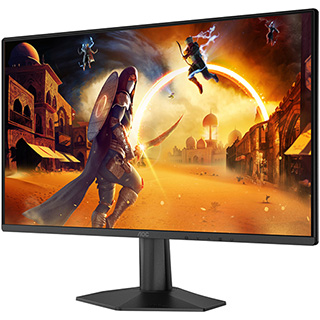 The brand-new AOC 24G51S and the AOC 24G50S form a pair so alike that telling them apart requires looking at the stand. Their panels, performance metrics, physical dimensions, and overall design language mirror each other to the point where the base shape becomes the only practical distinction. Both monitors rely on a 23.8‑inch IPS display running at 1920 x 1080, offering 300 cd/m² brightness and…
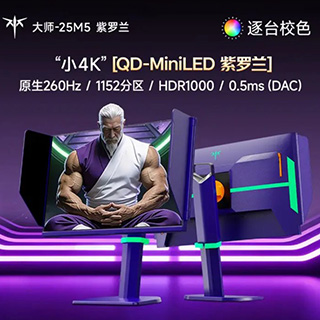 The KTC 25M5 is an advanced esports monitor that was launched in China and teased for a global release with an unspecified timeframe. The monitor features a 24.5-inch Fast IPS display with a QHD resolution and a 260Hz refresh rate. It uses a BOE MV245QHB‑NF1 display panel with 10‑bit color (8‑bit + FRC) paired with Quantum Dot Color technology, covering 100% of the sRGB, 96.4% of the Adobe RGB…